
This post contains affiliate links. I will earn a small commission, at no extra cost to you, if you make a purchase through these links.
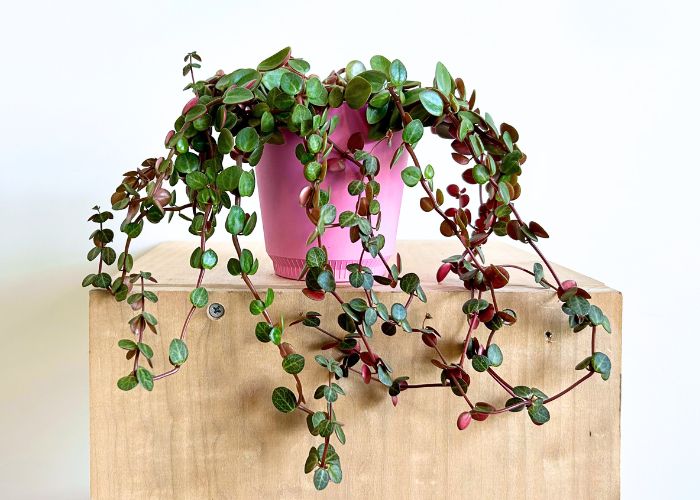
Peperomia Verticillata, also known as the red log or red twist, is a unique and low-maintenance peperomia—perfect for beginners! Learn how to care for the Verticillata in this post, and be sure to watch the video for even more helpful details.
Light
Peperomia verticillata does best in bright, indirect light. I keep mine in my greenhouse cabinet with grow lights, and it’s been very happy in there for over a year! Rotate your plant every few days if you prefer the look of an even growth pattern; this peperomia tends to grow very quickly towards a light source, leading to some crazy-looking vines!
Water
Peperomia verticillata, like many peperomias, has succulent-like leaves that store water. They don’t need to be watered frequently. Only water when the potting mix is almost completely dry.
Humidity
While humidity is appreciated, it’s not essential for the red log plant. Average household humidity will be just fine.
Repotting
Peperomias are known to be slow growers. They also have shallow root systems and like to be somewhat rootbound. All these factors mean that you won’t have to repot your red log often (yay!). Repot the plant when roots are coming out of the drainage holes. If this doesn’t happen in a few years, change out the old potting mix in order to replace the nutrients with fresh potting mix. You can even leave it in the same pot if it still fits! If your peperomia verticillata DOES need a bigger pot, only go one to two sizes up from its current pot (to avoid overpottng and therefore overwatering), and ensure the new pot has a drainage hole.
Potting Mix
Use a very well-draining, well-aerated mix. You can achieve this by using a regular houseplant potting mix with some extra perlite for even better drainage. I eyeball my potting mixes, going up to a 1:1 potting mix-perlite ratio, depending on how well draining I want it. It’s not such an exact science!
Fertilizer
Peperomias are not heavy feeders; they are slow growing with delicate root systems. They don’t need much fertilizer, if any at all, but a dose of general houseplant fertilizer once a month during the growing season (spring and summer) can be a nice boost for them. Just don’t overdo it!
If you love peperomias, check out these posts!
Leave a Reply