
This post contains affiliate links. I will earn a small commission, at no extra cost to you, if you make a purchase through these links.
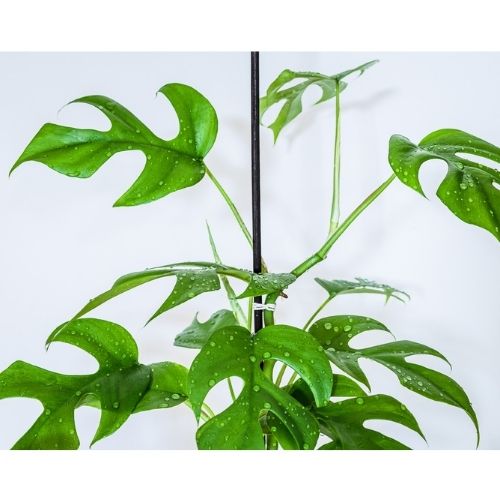
Rhaphidophora tetrasperma, also known as the “mini monstera,” is a fast-growing, easy-to-care-for climbing vine. In this post, I’ll review care and propagation for this beautiful plant!
Rhaphidophora tetrasperma is native to parts of Thailand and Malaysia.
Before we fully dive in, let’s address the elephant in the room:
Is a Rhaphidophora Tetrasperma a Monstera?
No! Rhaphidophora tetrasperma is not a monstera. Although it’s sometimes referred to as the “mini monstera” (because it looks like Monstera deliciosa), make no mistakes, this plant is NOT a monstera at all.
It’s important to know the differences, especially because monsteras are in such high demand. You need to make sure you actually know what plant you’re looking at. Here are a few differences:
- Rhaphidophora tetrasperma’s leaves are smaller.
- Young Monstera deliciosa typically has very small fenestrations or none at all. Rhaphidophora tetrasperma looks like a small Monstera deliciosa but it WILL have fenestrations.
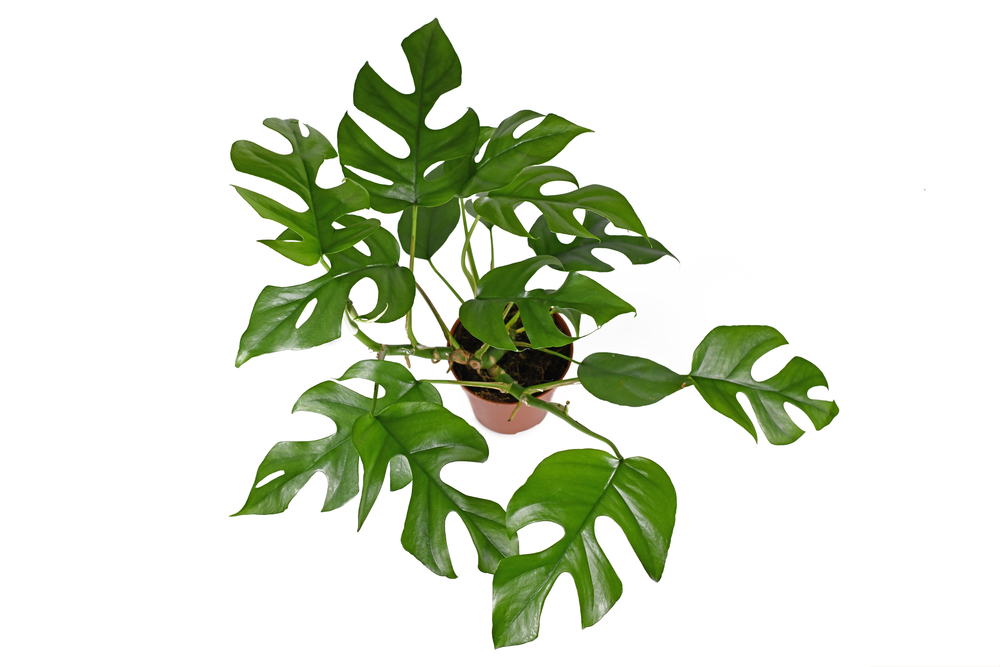
- On mature Monstera deliciosas, the fenestrations will either be holes or splits with the tips growing towards each other. The Rhaphidophora tetrasperma fenestration tips will be more open, which you’ll see in the photos in this post. They also tend to have fewer holes.
- The two are part of the same family, Araceae, but Monstera deliciosa is part of the Monstera genus and Rhaphidophora tetrasperma is part of the Rhaphidophora genus.
- They are found in two totally different parts of the world (Thailand and Malaysia vs. Southern Mexico and Central America).
Where Can I Buy a Rhaphidophora Tetrasperma?
You can find this unique houseplant on Etsy.
Check out this gorgeous Rhaphidophora tetrasperma from one of my favorite Etsy shops!
Sometimes, Rhaphidophora tetrasperma are mislabeled as Monstera deliciosa and vice versa.
Of course, it might be an accident, but unfortunately, it’s done by some sellers to drive up the prices of plants. Use caution when purchasing in-demand plants and make sure to check the reviews.
Rhaphidophora Tetrasperma Care
The basic care requirements of this plant are:
- Provide with bright, indirect light
- Water when the top inch or two of the potting mix is dry
- Give it a well-draining potting mix that holds some moisture
Read on for a full care guide!
Light
Rhaphidophora tetrasperma does best in bright, indirect light. This means the light would pass through something first before hitting the plant, like a sheer curtain.
They can tolerate some direct sunlight as long as they’re not sitting in it all day.
This plant will survive in low light but will grow a lot more slowly. Not to worry though! If you lack adequate natural light for Rhaphidophora tetrasperma, a grow light will do the trick!
I’ve used many different grow lights, but this clip-on, gooseneck grow light continues to be my all-time favorite because it is extremely easy to position in just about any angle you need it to reach!
I also have a post for helpful information on grow lights for plants.
How often should I water Rhaphidophora?
Rhaphidophora tetrasperma likes to remain moist (not WET, but moist). Water your plant when the top inch or two of the soil is dry.
How often you actually water will vary based on factors like the amount of sunlight the plant receives and the time of year (houseplants require less water in the winter since they are not in the active growth stages).
While this plant is relatively easy to care for, watering is probably the one tricky part of Rhaphidophora tetrasperma care.
Although it likes to remain moist, make sure you’re not keeping it too wet or it could be at risk of root rot.
Why is my Rhaphidophora tetrasperma drooping?
While droopy leaves could mean a few things, the most likely cause is either overwatering or underwatering. Therefore, it’s crucial to use your finger to feel down into the soil for moisture levels to determine the cause.
Actually, you should get in the habit of always doing this before watering your plants to determine if they actually need it first.

Humidity
As Rhaphidophora tetrasperma is native to tropical regions it will definitely appreciate some extra humidity! There are many ways of providing humidity for your houseplants, but I prefer using a humidifier because it’s easy and long-lasting.
This is one of my favorite humidifiers because it can last over a full day—less refilling to worry about!
Check out my post on how to create humidity for plants for a step-by-step guide to different methods.
Temperature
Like other tropical plants, Rhaphidophora tetrasperma prefers to be on the warm side. However, it will be fine in your normal household temperatures.
Just don’t let the temperature fall below 60 degrees Fahrenheit (around 16 degrees Celcius), or it won’t be happy. Move it away from any drafty areas or cold windowsills.
Isn’t this “mini monstera” incredible? You can buy this plant here!
Potting Mix
Since this plant likes to remain moist, but shouldn’t remain wet, a well-draining potting mix that holds some moisture is ideal.
One-part indoor plant potting mix combined with one-part orchid bark, with some horticultural charcoal tossed in will work well for this plant.
Fertilizing
Rhaphidophora tetrasperma is somewhat sensitive, so be careful not to overfertilize it or it could burn the roots. Use a balanced indoor plant fertilizer once a month during the growing season (the spring and summer).
Repotting
This plant is a fast grower, so you’ll usually need to repot it once a year.
In some circumstances, you might even need to repot it twice a year to keep it from becoming rootbound. If you see roots coming out of the drainage holes or if growth has slowed significantly, then it’s also time to repot.
Repot your plant in a pot the next size up from its current one that has good drainage. It’s best to repot during the growing season (spring and summer) if possible.
I really love terra cotta pots because they dry out quicker putting your plant at less risk of root rot!
Pruning
Rhaphidophora tetrasperma doesn’t require much pruning aside from removing any dead or dying leaves once they can be gently plucked away from the plant.
Vining plants also have a tendency to get “leggy” which is when the vines become very long and stretched out with fewer leaves, usually due to the plant trying to reach out to find more light.
You can create a more bushy plant by pruning the vines to encourage new growth. When pruning, use clean, sharp scissors to cut about a 1/4 inch above a node (meaning, the node is not included on the cutting).
Climbing
Rhaphidophora tetrasperma is a climbing vine. In the wild, it uses its aerial roots to climb up something in its natural habitat, like a tree.
Therefore, putting those aerial roots to use and providing the plant with something to climb up in your home will help keep your plant strong and healthy.
There are a few things you can give your plant to climb up, such as a moss pole or trellis.
How Do You Propagate Rhaphidophora Tetrasperma?
Water Propagation
The easiest way to propagate Rhaphidophora tetrasperma is by propagating cuttings in water.
Use a pair of clean, sharp scissors and cut off a piece that includes at least one node and a leaf, cutting a 1/4 inch below a node (meaning, the node will be included on the cutting).
Put the cutting in a glass of water, making sure at least one node is under the surface. This is important because the node is where the new roots will sprout from.
Place the cutting in a location with bright, indirect light. Be sure to change the water when it gets murky or slimy, about every few days to a week, and fill the water back up when it gets lower.
I usually like to wait until the roots are two to three inches long to transfer the cutting to potting mix. Roots on this plant may take several weeks to grow a few inches long.
Once the roots have grown a few inches long, you can transfer your cutting to its permanent pot. Give it a good watering, then care for it how you normally would!
Potting Mix Propagation
You can also propagate Rhaphidophora tetrasperma in potting mix.
Use a pair of clean, sharp scissors and cut off a piece that includes at least one node and a leaf, cutting a 1/4 inch below a node (meaning, the node will be included on the cutting).
Place the cuttings directly into the potting mix so that the mix covers at least one node (remember, the node is where the roots will sprout from). Make sure your pot is appropriately sized for the cutting.
Keep the potting mix moist and place in bright, indirect light.
After about a month, your cutting’s roots should be starting to establish. At this time, you can give your plant a VERY gentle tug to check for resistance. If there is resistance, the roots have been established!
Common Rhaphidophora Tetrasperma Problems
Yellow Leaves
Commonly caused by overwatering—ease up on the watering! Yellow leaves can be the result of other problems, too, like underwatering, too much direct light, and more. Overwatering is just the most common cause.
Brown, Crispy Leaves
Usually due to your plant being too dry—the potting mix might be too dry or the humidity in the air might be too low. Just like yellow leaves, this is not the ONLY cause, just what is usually the most common cause.
Root Rot
Caused by consistent overwatering. It’s the easiest way to kill a plant! Make sure you are feeling the potting mix with your finger first before you water your plant. That way, you can feel if your plant is still too wet to be watered again.
Spider Mites
First, give your plant a blast of water in the shower or with a hose to blast away most of the bugs.
There are a few ways to deal with getting rid of spider mites, but I usually use an insecticidal soap to spray down my plant or I make my own with neem oil, castile soap, and water. You might have to repeat this process multiple times to completely get rid of the problem.
Although these are some common causes, when you’re experiencing a problem with your plant, it’s important to review your overall care routine in order to narrow things down and figure out the exact issue.
Is Rhaphidophora Tetrasperma toxic?
Yes, Rhaphidophora tetrasperma is toxic to pets so be sure to keep it out of your furry friends’ reach!
Rhaphidophora Tetrasperma Care Summary
- Provide with bright, indirect light
- Water when the top inch or two of the potting mix is dry
- Give it a well-draining potting mix that holds some moisture
- Provide it with humidity and warm temperatures
- Use a balanced liquid indoor plant fertilizer once a month during the growing season
- Repot when it’s rootbound
- Provide it with a moss pole to climb
Add this GORGEOUS Rhaphidophora Tetrasperma to your collection!
Marietta says
Help my last 3 leaves are not fenestrated and smaller than the rest….what do you think?
Julie - Houseplant Aficionado says
Hi Marietta – This just means the leaves are not mature enough yet to have fenestrations. Make sure you’re giving your adansonii the conditions to make it happy—bright, indirect light, watering when the top inch of the soil is dry, and providing it with something to climb like a moss pole.
Laura says
My friend gave me a cutting in water, which I’ve been changing whenever it gets murky. It recently started putting out a new leaf, but in the last two days it has withered and turned brown. The original leaves (there’s three) still look fine, but I’m worries they’ll wilt too. What’s wrong with him??
Julie - Houseplant Aficionado says
Hi Laura – If the roots haven’t developed much yet it’s possible there wasn’t enough of a root system to support a new leaf. If the other leaves still look fine I wouldn’t worry too much 🙂
Maria says
I cut the very top of my plant’s main stem off because it was becoming crooked and I wanted to propagate it. Will my plant grow taller or will it stop now that I cut the main stem?
Julie - Houseplant Aficionado says
Hi Maria – It will most like continue to grow from a nearby node 🙂
Shary says
Please help! My Rhaphidophora tetrasperma is pushing out new leaves like crazy, and they are strong and healthy. But suddenly the oldest bottom leaves are one by one yellowing, then browning and dying! It’s happening quick, and I checked- it’s not root rot or under watering. I give it regular fertilizer (diluted, not too much as to burn the roots) and the affected leaves are in indirect sunlight. What I doing wrong? I’ve lost 5 leaves now, like one a day!
Dorothy says
My Rhaphidophora is growing very well on (1) stem up my wall. We know how fast they grow. When one open another is forming. But its growing but it has been in that same position of seeing the form for wks but not coming thru. I don’t know the worded term for it. But I put my humidifier on something so it could reach that area to help it along. It haven’t burst thru the layer. Just odd how it was popping one after another now at a stand still
Julie - Houseplant Aficionado says
Hi Dorothy – If I understand your comment correctly—you basically have a leaf that is not opening? I would give it some fertilizer and see if that helps at all. Honestly, when this happens to my plants I just leave them alone. If it’s very close to opening you can try to use your fingers to help it, but just be aware you could end up damaging the leaf.