
This post contains affiliate links. I will earn a small commission, at no extra cost to you, if you make a purchase through these links.
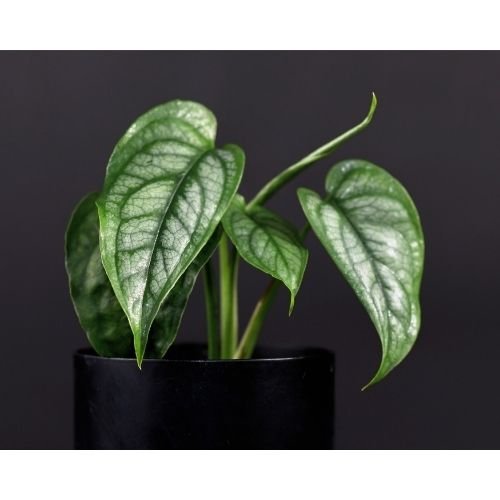
Are you looking to fill out your Monstera collection? Then look no further because you cannot skip over the beautiful Monstera siltepecana, or “silver monstera.” Read on for everything you need to know about Monstera siltepecana care and propagation!
Where can I buy a Monstera siltepecana?
You can easily find a Monstera siltepecana for sale on Etsy.
Check out this gorgeous Monstera siltepecana from one of my favorite Etsy sellers!
Is Monstera Siltepecana rare?
Monstera siltepecana is still considered somewhat rare. You’re not likely to find one in stores but you can definitely get your hands on one online. However, larger plants will come at a higher price.
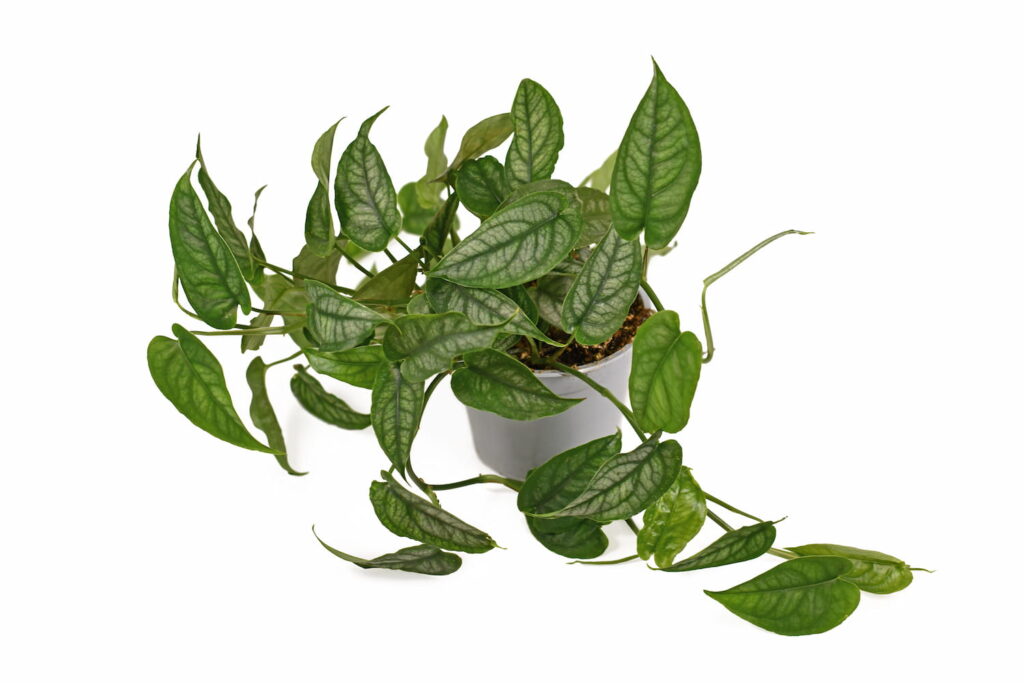
How do you care for Monstera siltepecana?
Monstera siltepecana care is just about as easy as any other tropical vining plant. Below is a quick guide, but be sure to read on for all the care and propagation tips you don’t want to miss!
| Light | Bright, indirect |
| Water | When the top inch of the potting mix is dry |
| Humidity | Yes |
| Temperature | Fine with average household temperature |
| Potting mix | Well draining |
| Fertilizer | General houseplant fertilizer at half-strength |
| Repotting | When rootbound |
| Pruning | To remove dead foliage, control shape/size, fix legginess, encourage new growth |
| Climbing | Yes – Giving it a moss pole will help it grow larger/stronger |
Light
Bright, indirect light is best for Monstera siltepecana. Direct light could hurt the leaves.
If you don’t feel that you have enough sunlight to keep your Monstera happy, no worries! Grow lights are an excellent solution and I personally keep almost all of my plants under grow lights.
These are my absolute favorite grow lights. I’ve had them for a while now and my plants really thrive underneath them. The clip and two adjustable gooseneck lights make them insanely convenient to use pretty much anywhere you need them!
Water
Like many other tropical plants, this Monstera doesn’t like to completely dry out. Water it when the top inch of the potting mix is dry.
To avoid overwatering and root rot, but sure to stick your finger down into the potting mix to feel the moisture level before you water.
Humidity
Being native to tropical areas of Central America and Mexico, Monstera siltepecana will be happy if you provide it with higher humidity.
The easiest way to provide more humidity is by using a humidifier. I really like this humidifier because it can last over a full day, so you can set it and forget it!
Temperature
Same as humidity, being native to tropical environments, they prefer warmer temperatures. However, they will also be OK in normal household temperatures. Just keep them away from any cold windowsills or drafts.
Potting Mix
A well-draining indoor plant potting mix will work just fine for this Monstera. Adding in some extra perlite to increase drainage is always a good idea, too. If you want to go all out, you can use an aroid potting mix, but it’s not necessary!
Fertilizing
You can use a general houseplant fertilizer for your Monstera siltepecana. Dilute it by half and use it once a month during the growing season (spring and summer). Here’s the fertilizer I’m using on my plants right now.
Repotting
Monstera siltepecana isn’t high maintenance. Just repot it when it’s rootbound. A rootbound plant will have:
- Roots coming out of the drainage holes
- Lots of roots wrapped around the outside/bottom of the soil when you slip the plant out of its pot
- Stunted or all-around sorry-looking growth
If possible, try to wait to repot during the growing season (spring and summer), and use a pot the next size up that has good drainage.
Pruning
Remove any dead or dying leaves when they can be gently plucked off your plant.
Other than that, you can prune your Monstera siltepecana to control the size and shape, encourage new growth, and fix legginess.
Use a pair of clean, sharp scissors to cut just above a node. Cutting above means the node will remain on the plant—not the part you cut off. This is important because nodes are where new growth (leaves and roots) grow out of the stem.
Monstera Siltepecana for sale on Etsy here—grab one for your collection today!

Climbing
Like other vining plants, Monstera siltepecana’s growth habit is to climb. Plants that climb in nature like to climb in your home, too! Giving them something to climb, like a moss pole, will help them grow to their full potential and develop fenestrations.
Do Monstera siltepecana get fenestrations?
Yes, although the juvenile form of this plant does not have fenestrations, mature Monstera siltepecana leaves will eventually develop fenestrations!
Your best chance at getting the plant to this stage is by giving it a moss pole or something similar climb. Remember, as mentioned earlier, plants that naturally climb will grow to their full potential when they are allowed to climb indoors, too.
Foliage and Flowers
Monstera siltepecana has arrow-shaped leaves that are thinner and more elongated than you would see on a pothos, for example. The leaves are a light greenish-silver color with darker green veins. Its coloring is why it’s commonly called the “silver monstera.”
Like other aroids, they produce a spathe and spadix bloom, but you won’t always see this when it’s grown as a houseplant.
Problems and Pests
Why is my Monstera Siltepecana turning yellow?
The most common cause of yellowing leaves is overwatering. However, it can also be caused by underwatering. Be sure to stick your finger down into the potting mix to check the moisture level BEFORE you water your plant.
Root Rot
Although this Monstera does not like to dry out completely, be sure not to overwater it either. Consistent overwatering will cause root rot. Check out my post on root rot for more help with that.
Why does my Monstera Siltepecana have brown, crispy leaf tips or edges?
Your plant is most likely too dry. Make sure you’re not letting your Monstera dry out completely. Very dry air could also cause brown tips. Try using a humidifier if you suspect that’s the cause.
Legginess
This is a common problem for vining plants. Legginess is when the plant’s stems become long and stretched out with fewer leaves.
It is usually due to lack of enough light—the plant is trying to reach more light. Ensure your plant is receiving bright, indirect light and prune away the legginess if you don’t like the look.
Pests
You might experience mealybugs, scale, spider mites, and aphids. There are more specific ways to deal with each type of pest, but I really like Bonide Systemic Houseplant Insect Control for general pest prevention and control.
Monstera Siltepecana Propagation
Propagating Monstera Siltepecana is just like propagating any other vining plant. It can be done in water or directly into potting medium (like potting mix or sphagnum moss).
Monstera Siltepecana propagation in water
- Use a pair of clean, sharp scissors to cut off a vine with a couple of healthy leaves. Make your cut just below a node.
- Below a node means it will be included on the part you’re cutting off the plant. Remember, the node is where new leaves and roots grow out of the stem, so this is why you need a node on your cutting—because you want to grow roots!
- Place the cutting into a jar of room-temperature water. Make sure the node is under the surface, but that none of the leaves are under the surface.
- Put the jar in bright, indirect light and change the water once a week or so. Be sure to also top off the water level when it gets lower.
- Once your roots are two to three inches long, you can transfer the cutting into its permanent home. Plant your cutting into an appropriately sized pot with potting mix. Water it thoroughly and then care for the plant how you normally would.
Note that the cutting will need some time to adjust to its new home, so don’t worry if it doesn’t start growing new leaves right away!
Monstera Siltepecana propagation in potting mix
To propagate your cutting directly into potting mix instead of in water, simply repeat the same general process:
- Use a pair of clean, sharp scissors to cut off a vine with a couple of healthy leaves. Make your cut just below a node.
- Below a node means it will be included on the part you’re cutting off the plant. Remember, the node is where new leaves and roots grow out of the stem, so this is why you need a node on your cutting—because you want to grow roots!
- Instead of placing the cutting into water, plant it directly into a small pot with moistened mix. Make sure at least one node is buried but don’t bury any of the leaves.
- Put the cutting in bright, indirect light and keep the potting mix moist (not WET) as the roots develop.
- You can also put a clear plastic bag over the top to help lock in humidity which will help the cutting along. Remove the bag for a few minutes every other day or so to let in some fresh air.
- After about a month, you can test if roots have developed. Very gently give the cutting a tug. If you feel some resistance, that means roots have formed and you can start caring for it like a normal plant!
How fast do Monstera Siltepecana grow?
Similar to other vining plants, Monstera Siltepecana grows very fast in optimal conditions. This is especially true if they are given something to climb like a moss pole.
How big does Monstera Siltepecana get?
A fully mature Siltepecana’s leaves can grow as long as five inches and the plant can grow to upwards of 15 feet in nature. They most likely will not get this large in your home, though.
Is the Monstera siltepecana pet safe?
No, Monstera Siltepecana is not pet safe. It is toxic, like other Monsteras, so be sure to keep it out of your furry friend’s reach!
Is Monstera Siltepecana a philodendron?
You might see this plant referred to as “Philodendron Siltepecana,” but Philodendron and Monstera are two different genera. Monstera Siltepecana is the correct name for this plant, and it is not a philodendron.
Monstera Siltepecana Pronunciation
Monstera Siltepecana is pronounced: Mon-stare-ah Sil-teh-pe-cah-nah
Similar varieties and plants
- Many confuse the Monstera Siltepecana with the Monstera Peru. While they are not the same plant, they do look similar. The Monstera Peru is typically deeper green in color rather than greenish silver like the Siltepecana.
- Monstera Siltepecana ‘El Salvador’ is a similar-looking variety, however, the leaves grow much larger and this variety is very rare. (Thanks to Verdant Dwellings for this info.)
- Monstera Siltepecana and Cebu Blue Pothos are also sometimes confused with each other. The Cebu Blue’s leaves are thinner and they don’t have the distinct veins that the Siltepecana does. The Cebu Blue also has a signature blueish tint.
Convinced this is your next plant? You can buy this Monstera here!
Care Summary
- Light – Bright, indirect
- Water – When the top inch of the potting mix is dry
- Humidity – Yes!
- Temperature – Fine with average household temperature
- Potting mix – Well draining
- Fertilizer – General houseplant fertilizer at half-strength
- Repotting – When rootbound
- Pruning – To remove dead foliage, control shape/size, fix legginess, and encourage new growth
- Climbing – Yes! Giving it a moss pole will help it grow larger/stronger
More Monstera Posts
- Monstera Peru
- Monstera Adansonii
- Monstera Deliciosa
- Monstera Epipremnoides
- “Mini Monstera” (Rhaphidophora Tetrasperma – not actually a Monstera)
Leave a Reply