
This post contains affiliate links. I will earn a small commission, at no extra cost to you, if you make a purchase through these links.
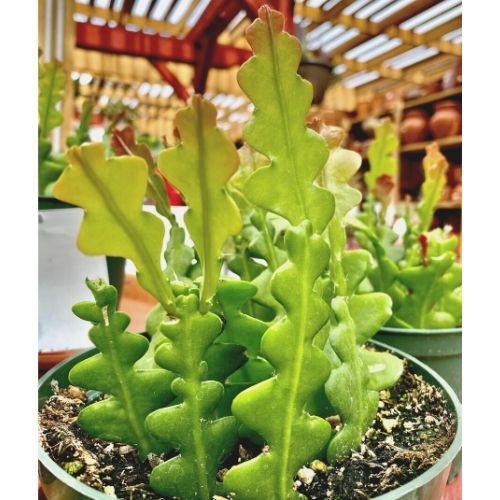
The fishbone cactus (Epiphyllum anguliger) is a super cool epiphytic cactus known for its extremely unique fishbone shape. The plant also goes by some other names, like orchid cactus, zig zag cactus, and ric rac cactus. In this post, I’ll explain exactly how to care for and propagate the fishbone cactus.
This fishbone cactus is an epiphytic cactus, meaning it grows on the surface of another plant, usually a tree. A cactus? On a tree? That’s right! This cactus is native to the jungles of Mexico—NOT the desert. The care requirements are a little different than your “standard” desert cactus, but this plant is actually pretty easy.
Where can I buy a fishbone cactus?
You can easily find yourself a fishbone cactus on Etsy!
Check out this AWESOME fishbone cactus from one of my favorite Etsy shops!
How do you take care of a fishbone cactus?
The keys to fishbone cactus care are proper light and watering.
People often get this wrong because they assume this plant wants to be in full sun and to dry out completely, like many other cacti. Wrong! Keep reading for proper fishbone cactus care.
Light
Provide your cactus with bright, indirect. It can handle a little direct light or some lower light, but it will be happiest in bright, indirect light.
If you need more light for your cactus I recommend grow lights. I use them for more than half of my plants, as I just don’t have the window space!
These clip-on, goose-neck grow lights are my absolute favorite and are so versatile and convenient to use just about anywhere!
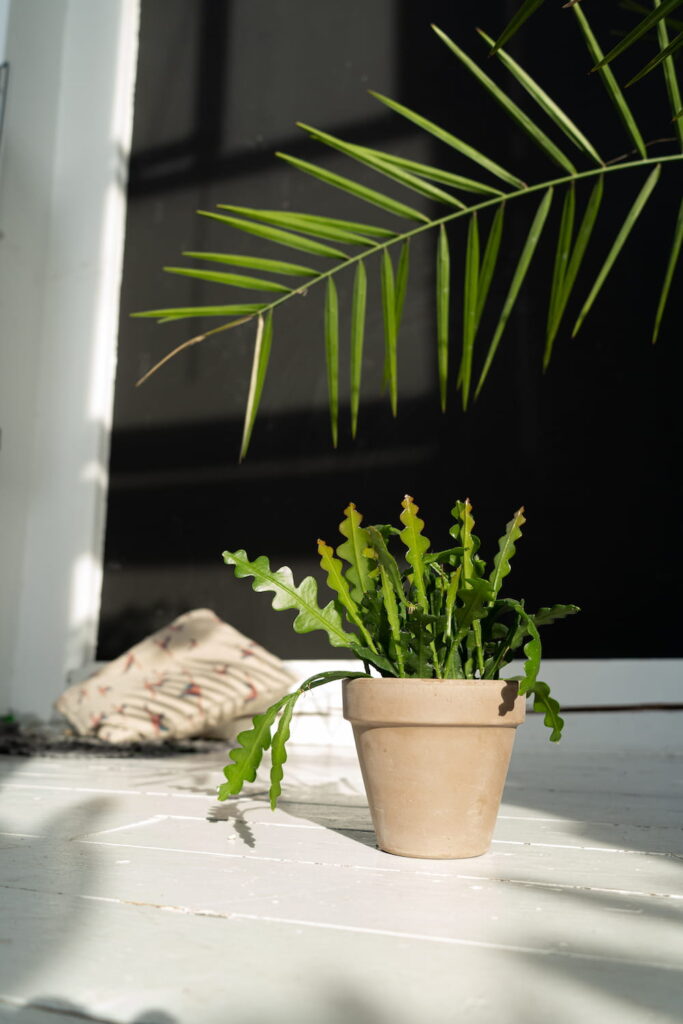
How often do you water a fishbone cactus?
Water your fishbone cactus when the top inch or so of the potting mix is dry. In the winter it can dry out a little more, but don’t let it get completely dry for too long.
How often your water will depend on your climate, with more watering necessary in hot/sunny weather. Try not to overwater your cactus or you could put it at risk of root rot.
Humidity and Temperature
Because they come from the jungle, they prefer higher humidity, but they’ll also do fine in normal household humidity. The easiest way to create humidity for your houseplants is by using a humidifier.
I really like the one I linked to because it can last a full day. With the dry air where I live, extra humidity is extremely helpful for my plants!
Normal household temperatures will be fine but keep them away from cold windowsills and dry vents (either from heat or air conditioning).
Potting Mix
Because this is a cactus and an epiphyte, it should be potted in a well-draining and well-aerated mix. An indoor plant potting mix with perlite and orchid bark works well (about a 1-1-1 ratio, but I’m more of an eyeballer!).
This will provide aeration to the roots while also holding onto some moisture since this cactus doesn’t want to totally dry out.
Fishbone Cactus Display
You can totally pot up your fishbone cactus in a normal pot. However, it’ll really do well in a hanging basket since it is an epiphyte and is used to growing high up in the air rather than on the ground.
And, if you want to get crazy you can even mount your fishbone cactus, which is very popular to do with staghorn ferns and other epiphytic plants.

Fertilizing
Use a water-soluble houseplant fertilizer every one to two months during the growing season (spring and summer). It’s better to under-fertilize your cactus as its very easy to kill a plant with too much fertilizer!
Repotting
Repot your fishbone cactus every year to every other year depending on its growth right. They like to be somewhat rootbound. Use a pot one size up from its current pot that has good drainage. Try to repot during the growing season (spring and summer), if possible.
Pruning
You can prune your cactus to control its size and shape. Use a pair of clean, sharp scissors to cut a mature stem back to its base. That stem won’t regrow from the same place, but pruning will encourage growth from around the area where the stem was cut.
Normally when pruning you’d want to pay attention to nodes, cutting just above them, but the fishbone cactus has a node on each stem indentation, so you can basically cut right across anywhere on a stem!
You can also propagate these stems, too. I’ll review propagation a little further down, so read on!
Check out this gorgeous fishbone cactus from one of my favorite Etsy shops!
Fishbone cactus problems, diseases, and pests
Houseplant problems can have a variety of causes so it’s important to evaluate your entire plant care routine, but below are a few common reasons for some fishbone cactus problems.
- Shriveled stems – Commonly caused by underwatering.
- Reddish-orange areas on the stems – Most likely caused by too much direct sun. Your plant has sunburn!
- Soft, mushy stems, yellow stems – Commonly caused by root rot due to overwatering.
- Pests – Generally not a big problem for fishbone cactus, but you may experience mealybugs or scale. There are more specific ways to deal with these two pests, but for general houseplant pest control, I really like Bonide Systemic House Plant Insect Control. Make sure to read the instructions on the label and use caution if you have pets or children.
Fishbone Cactus Propagation
Propagating a fishbone cactus is actually pretty easy! You can propagate your cactus in water or in potting mix, and by using a few different methods.
Fishbone Cactus Propagation in Water
Take a pair of clean, sharp scissors and cut off one of the stems, close to its base. (The fishbone cactus has a node on each stem indentation, so you can really cut anywhere you want on the stem and the cutting will grow roots. But cutting at the base, of course, will give you a bigger cutting.)
Give the cutting a few days to dry out and form a callus. Put the cutting into a jar of room-temperature water. The jar doesn’t need to be full all the way, it just has to cover the bottom of the cutting.
Put the jar in bright, indirect light and replace the water when it gets grimy. When you have roots that are a few inches long (I like to wait until they are two to three inches long), you can transfer your cutting into potting mix.
Give it a good watering and care for the plant how you normally would.
Fishbone Cactus Propagation in Potting Mix – Whole Stem
Take a pair of clean, sharp scissors and cut off one of the stems, close to its base. As mentioned above, this plant has a node on each stem indentation, so you can really cut anywhere you want on the stem and the cutting will grow roots.
Give the cutting a few days to dry out and form a callus. Plant the cutting into a pot with potting mix. Keep the potting mix moist, but not wet, as the roots develop. Put the pot in bright, indirect light.
If your cutting is small enough, you can put a clear plastic bag over the top to lock in helpful humidity. Remove it every few days or so to let in fresh air. If your cutting is too big for this, don’t worry about it.
After a few weeks, you can try giving your cutting a gentle tug to feel for resistance. If there is some resistance, that means a root system has developed and you can start treating your cutting like a normal plant.
Fishbone Cactus Propagation in Potting Mix – Stem Cuttings
Take a pair of clean, sharp scissors and cut off one of the stems. Then, cut the whole stem into sections that are a few inches long. Make sure you are keeping track of which part is the top vs. the bottom of each section. Give the sections a few days to dry out and form calluses.
Now, follow the same general process as propagating a whole stem in potting mix: Plant the sections into a pot with potting mix, making sure you’re planting the bottom part down and the top part up.
Keep the potting mix moist, but not wet, as the roots develop. Put the pot in bright, indirect light. Put a clear plastic bag over the top to lock in helpful humidity. Remove it every few days or so to let in fresh air.
After a few weeks, check on the roots of the sections by giving them a tug to feel for resistance. If there is some resistance, that means a root system has developed.
Now, you can pot up your little sections into separate pots where they can grow to be full-size plants, and care for them how you normally would with this plant.
Note: You can also propagate the cutting sections in water, but it’s tricky to keep them from falling into the water.
Fishbone Cactus Propagation in Potting Mix – Division
Perhaps the easiest and quickest fishbone cactus propagation method is division. This method is usually done while repotting the plant.
Simply separate one or more sections of the cactus that have their own root systems from the main plant. Gently separate the roots and be careful to keep most of them as intact as possible. Use a clean, sharp knife if you need to cut any of the roots away from each other.
Then, pot each plant into its own separate pot and continue to care for the plants how you normally would.
Additional Information
How do I get my fishbone cactus to bloom?
The fishbone cactus produces white and yellow flowers that only bloom at night and start to die by the morning. Your fishbone cactus will not always flower and if it doesn’t, it doesn’t mean you’re doing anything wrong! Here are a few tips to increase your chances of getting a fishbone cactus flower:
- First, your plant needs to be mature—at least a few years old.
- Allow your plant to become a little rootbound.
- Increase the light, including some full sun, but still be careful not to give it too much direct light. Monitor your cactus in the brighter light.
- Switch to using a fertilizer meant for tomatoes—one that is higher in potassium.
Fishbone cactus aerial roots
As fishbone cacti are epiphytes, they have aerial roots! These aerial roots grow out of their stems and help them grab onto the surface they’re growing on.
They also help with some moisture and nutrient intake. The aerial roots might look a little odd, but they’re nothing to worry about.
Is fishbone cactus toxic to cats and dogs?
The fishbone cactus is non-toxic to cats and dogs, but keep in mind that it’s best practice to keep all plants out of your furry friends’ reach. And, you should definitely keep your pets away from even non-toxic cacti because of their spines.
Growth rate and size
This cactus is fast growing in the right conditions. Each stem can grow to be about a foot long but generally stay shorter than that when grown as a houseplant.
Similar plants
Selenicereus anthonyanus is also commonly referred to as “fishbone cactus” and also has that striking fishbone shape, making it look very similar to Epiphyllum anguliger (the plant discussed in this post).
However, Selenicereus anthonyanus’ stems are typically thinner in both the center “fishbone” and the “prongs” that stick out on either side.
Check out this gorgeous fishbone cactus from one of my favorite Etsy shops!
Elaine Minassian says
Oh my – you just answered a longstanding question about what this plant is. I have had this cactus for 9-10 years and the flowers are amazing when they bloom. I see other leggy cactus stems that are also prevalent throughout the plant. It is the one plant but has 2 different shaped leaves or legs. It has been recently moved quite a bit (2 yrs of moving each year) so I do not see any flowers but they do have the right conditions light and water to bloom. Hopefully they may bloom this year. Thank you very much for helping me finally identify my plant.
Julie - Houseplant Aficionado says
Hi Elaine – I’m glad my post helped solve the mystery! Thanks for sharing about your plant 🙂
RITA Merritt says
Does it bloom on new growth
Julie - Houseplant Aficionado says
Hi Rita – I don’t believe it’ll bloom on new growth since the plant needs to be mature to bloom. It’ll likely bloom on mature growth.
Gracia says
My cuttings shriveled and some became discoloured while waiting for it to callous overnight. I have now planted them in cactus soil but they still look limp. Do they have a chance of survival or are they dead now? It’s only been 3 days.
Nick says
Hello I recently acquired a mature but stressed looking Fishbone Cactus. It is pale green to yellow stems and definitely is not rotting. The soil looks like sand and I think it was in a position receiving direct afternoon sun. I plan to change soil and planter and reposition for morning sun. Should I prune right back to soil or will it return to a darker shade of green when happy?
Nusrat says
Thank you so much for detailed information. I read all your fish bone article. It’s so informative.
Hannah says
I’m trying to grow a zug zag cactus from a single cutting, but it looks a bit sparse, will it send up more leaves from the soil or do I need to cut some of the new leaves off and plant them in the soil along with the original. Or do i need to take more cuttings from my friend when i see her Thank you.
Bea says
What is the sticks that this plant has? Can I cut them?