
This post contains affiliate links. I will earn a small commission, at no extra cost to you, if you make a purchase through these links.
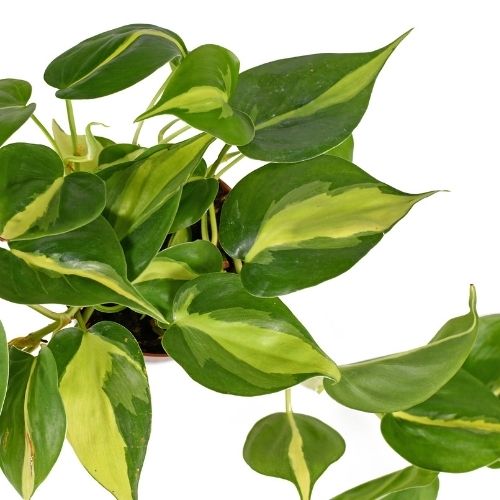
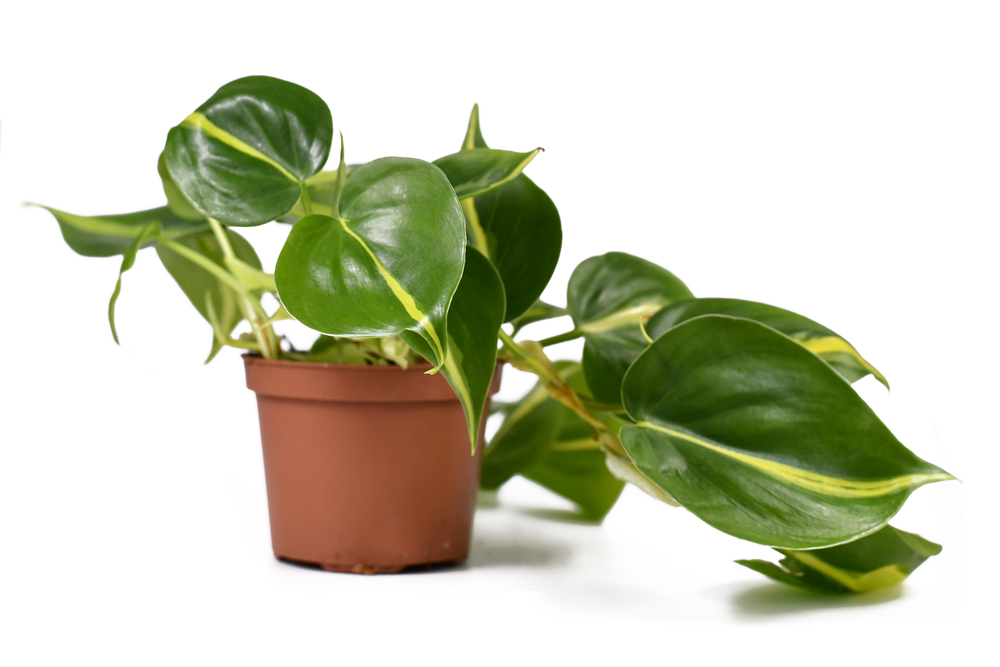
Philodendron Brasil, sometimes called the Brasil Philodendron, is a cultivar known for its super fun dark green and lime green variegated foliage. Read on for a full care guide, how to propagate this plant, and many more helpful tips!
Where can I buy a brasil philodendron?
You can easily find a Philodendron Brasil on Etsy! Check out this beautiful Brasil from one of my favorite Etsy shops.
Is the brasil philodendron easy to care for?
This philodendron is SO easy to care for, I can’t stress enough! It’s very low maintenance and perfect for all levels of plant parents—anyone who wants a unique twist on the classic heartleaf philodendron.
How do you care for a Philodendron Brasil?
Philodendron Brasil is such a low-maintenance and forgiving plant. Its basic care requirements are:
- Bright, indirect light
- Well-draining potting mix
- Water when the top inch or so of the potting mix is dry (so don’t let it dry out totally)
Read on for a full care and propagation guide!
Light
Your Brasil will thrive in bright, indirect light. This will help keep its variegation beautiful and bright! It can handle medium light, but in low light, it won’t grow as well and it’ll start to lose its variegation.
To help your Philodendron Brasil stay beautiful, I highlight recommend grow lights.
Below are two of my favorite grow lights because they are very convenient for where I need them—clipped onto a shelf and in my greenhouse cabinet.
Water
Philodendrons don’t like to totally dry out. Water your Brasil Philodendron when the top inch or so of the potting mix is dry.
How will you know when the potting mix is dry? You have to get up close and personal with your plant and stick your finger into the potting mix to feel for moisture. Yep, you gotta get a little dirty. It’s a small price to pay to prevent overwatering and root rot!
Potting Mix
Philodendron Brasil is so low maintenance. It doesn’t need any kind of special potting mix. Just provide it with a well-draining mix to prevent it from staying too wet for too long.
To do this, you can simply use a general houseplant potting mix with some extra perlite added in.
Honestly, I always just eyeball the amount of perlite I throw in. Maybe a couple of handfuls depending on how large the plant is!
Repotting
Philodendron Brasil likes to be somewhat root bound, so repot it every other year or so. When you notice slowed or stunted growth, or roots coming out of the drainage holes, it’s time to think about repotting!
Use a pot one size up from its current pot and make sure it has a drainage hole. Try to leave your repotting to the growing season (spring and summer) unless your Brasil desperately needs it.
Humidity
The Philodendron Brasil prefers a more humid environment, but you don’t need to stress about the exact humidity level.
I use a humidifier to easily provide humidity to all my plants. I really like the humidifier below because it can run for up to 96 hours. The less refilling I have to do, the better!
Temperature
Similar to humidity, the Brasil Philodendron prefers warmer temperatures, but you don’t need to worry about getting the exact temperature right either.
Your average household temperature will be fine, just try not to expose it to temperatures below 60 degrees Fahrenheit (about 16 degrees Celsius). You’ll want to think about moving it away from windowsills or drafty front hallways in the winter.

Fertilizing
Philodendron Brasil will benefit from fertilizing, but it’s important not to overdo it. Use a general houseplant fertilizer once a month during the growing season (the spring and summer).
Pruning
You can prune your plant to remove any leggy growth. Pruning will also encourage new growth, making for a bushier plant.
Use a pair of scissors to cut ABOVE a node on the vine you want to remove. This means if you point the vine at the ceiling, you would cut above the node. The node would remain on the main plant.
New growth will then sprout on that plant from that node.
In addition to this, you should also remove any occasional dead or dying leaves.
Foliage and Flowering
Brasil Philodendron’s foliage looks like a variegated mix of the heartleaf philodendron’s deep green and the lemon lime philodendron’s light green. When a new leaf emerges, the petiole, and sometimes even the leaf itself, has a peachy-pink tint.
So basically, it’s a super stunning plant!
And, like other aroids, the Brasil blooms a spathe and spadix. But it’s extremely unlikely you’ll see this on yours, as it usually only blooms in its natural habitat.
Buy a beautiful Philodendron Brasil right here!
Is Philodendron Brasil a climbing plant?
Yes! If given something to climb, Philodendron Brasil will use its aerial roots to grab on and climb. While your Brasil will still grow perfectly well trailing instead of climbing, allowing it to climb (its natural tendency) will help it grow larger and stronger.
I give my climbing plants moss poles which they can grab onto with their aerial roots. Below is the moss pole I use for my climbing plants.
I LOVE how it’s stackable so I can keep adding more to the top as my plant outgrows the height of the pole. So convenient!
Brasil Philodendron Propagation
Propagating the Brasil is just about as easy as propagating any other vine—VERY! There are a few ways you can do so.
Potting Medium Propagation
This involves propagating your Philodendron Brasil in potting mix, sphagnum moss, or something else if you have a preferred medium to use for propagation. I really like using sphagnum moss.
- Identify a healthy vine that has at least one leaf and one node. The vine can be just a few inches long, as long as it has a leaf and a node.
- You can actually propagate cuttings with only a node and no leaf, but it’s a lot more difficult.
- Use a pair of clean scissors to cut BELOW the node. This means if you point the vine towards the ceiling, you’ll be cutting below the node. The node should be on the part that’s getting cut off.
- Stick the vine into moistened sphagnum moss or whatever potting medium you chose, making sure the node is buried because this is where new roots will sprout from.
- Keep the medium lightly moist (not soaking wet), the light bright and indirect, and the humidity high as the roots develop.
- An easy to way keep humidity high for cuttings is by putting a clear plastic bag over the top or keeping the cuttings in a clear plastic contianer with a lid. Just remove the bag/lid every now and then for some fresh air.
- After a few weeks, test to see if roots have developed by giving your cutting a gentle tug and feeling for resistance.
- If there is resistance, then you can transfer your cuttings to their permanent pot, water them, and start caring for them as a normal plant.
Water Propagation
This follows the same basic method as propagating in potting medium, but you’re using water instead.
- Identify a healthy vine that has at least one leaf and one node. The vine can be just a few inches long, as long as it has a leaf and a node.
- Use a pair of clean scissors to cut BELOW the node. This means if you point the vine towards the ceiling, you’ll be cutting below the node. The node should be on the part that’s getting cut off.
- Stick the vine into a jar of water, making sure the node is under the water because this is where new roots will sprout from. Don’t submerge any leaves, though.
- Keep the cuttings in bright, indirect light as you watch the roots develop!
- When the roots are two to three inches long, you can transfer your cuttings to their permanent pot, water them, and start caring for them as a normal plant.
- Don’t worry if your plant doesn’t start growing right away. Its roots were used to growing in water, now they have to get used to potting mix!
Alternatively, you can even leave the cuttings to grow in water. It’ll definitely look pretty, but they won’t grow as fast and the plant won’t get as large.
Division
Division is a much quicker method. You’ll need a larger, mature plant, but if you want to make a new plant immediately, division is the way to go.
All this means is to divide one plant into two or more plants.
- Remove the plant from its pot.
- Identify some pieces of the plant that have their own root systems.
- Gently untangle the roots of each piece you want to separate.
- Try your best not to break any roots, but a few minor breaks are inevitable and generally OK.
- Pot up each piece into its own appropriately sized pot. You might need to find a smaller pot for the mother plant depending on how much you took off.
- That’s it! Water each new plant and give them some time to readjust before they start growing again.
Common Philodendron Brasil Problems
Leaves reverting (losing variegation)
Leaves can lose variegation and revert back to solid if they don’t have enough bright, indirect light. This is because the lighter in color the leaf is, the less chlorophyll the leaf has, and the more light it needs to be able to photosynthesize effectively.
However, sometimes the amount of light is perfectly fine, but the Brasil Philodenddron’s leaves will revert just because! It can happen as the plant matures, but my Brasil is still rather young and this has started to happen.
This doesn’t harm the plant, so you can totally let the leaves do their thing. If you do want to try and “fix” your plant (re-grow more variegated leaves), prune the non-variegated leaves back until you get to a variegated leaf on the vine.
Do not cut the variegated leaf off. Remember in the pruning section I discussed cutting “above” the node? That’s what you should do here. Cut right before that leaf node so the leaf will remain on the plant.
This will give your plant a good chance of pushing out a similarly variegated leaf from that node.
Leggy vines
Leggy vines are common and definitely nothing to panic over. “Leggy” is when a vine or stem is very long and stretched out with fewer, and usually smaller, leaves.
It means the plant is not getting enough light—it’s trying to reach out and find more!
Simply prune off the leggy vines and ensure your plant is getting enough bright, indirect light.
Curling or droopy leaves
Curly and droopy leaves most likely mean your plant is way too dry. Feel the potting mix to confirm this, just in case. Then, give it a good watering and your plant should perk back up within the day.
Yellow leaves
One or two occasional yellow leaves are not something to be concerned about. The most common cause of this is overwatering. Pluck the dead leaves off and allow your plant to dry out more before watering it again.
Root rot
Root rot is when we’re past the “no-big-deal-yellow-leaves” part. This means you’ve consistently overwatered your plant and the roots are now drowning, causing the rest of the plant to die.
Your plant can be saved if you catch it early, so check out my root rot post for more help!
And remember (as if I haven’t said it enough!), you should be feeling for soil for moisture first before watering in order to prevent overwatering.
Pests
Pests are not a huge problem for Philodendron Brasil, but there’s always a risk of pests when you have houseplants. Some common pests include fungus gnats, aphids, spider mites, mealybugs, and scale.
To help prevent pests in the first place, I treat any new plant I bring into my home with Bonide Systemic Houseplant Insect Control.
For general pest control, I use an insecticidal soap.
Be sure to read the directions on both and use caution if you have pets.
Additional Information
Where is Brasil Philodendron native to?
The philodendron is native to—you guessed it—Brazil! It was actually discovered in a controlled environment, though. Here is a direct quote from the Philodendron Brasil patent:
The new Philodendron is a naturally-occurring whole plant mutation of an unnamed selection of Philodendron scandens oxycardium. The new Philodendron was discovered by the Inventor in a controlled environment in Holambra, Brazil, as a single plant within a planting of the unnamed selection in 1991.
Philodendron plant named ‘Brasil’ – USPP12956P2
Growth rate and size
Like other tropical vining plants, the Brasil Philodendron is a fast grower! In optimal conditions, it can grow several feet in a year.
This philodendron can reach 12 feet or sometimes even higher as it continues to climb, climb, climb up its tree in the wild! It typically will not reach this length growing hanging down from a pot or basket, though.
Is Philodendron Brasil slow growing?
No! Philodendron Brasil is a fast-growing plant. In optimal conditions, it can grow several feet in a year.
How do you make Philodendron Brasil’s leaves bigger?
You can help your Philodendron Brasil’s leaves grow larger by providing it with optimal conditions, lots of bright, indirect light, fertilizing it during the growing season, and by giving it a moss pole to climb.
Is Brasil a pothos or philodendron?
Pothos and philodendrons look very similar, but they’re two separate genera. The Philodendron Brasil is in the philodendron genus, so it is a philodendron.
Are Brasil Philodendrons rare?
No, lucky for us, the Brasil Philodendron is not rare! They are very easy to find. In fact…
Is the Philodendron Brasil toxic?
Yes, this plant is toxic so be sure to keep it far away from pets!
Philodendron Brasil Care Summary
- Bright, indirect light
- Well-draining potting mix
- Water when the top inch or so of the potting mix is dry (so don’t let it dry out totally)
- Repot every other year when root bound (it likes only some root bound-ness)
- Provide with humidity and warm temperatures
- Use a general houseplant fertilizer once a month during the growing season
Leave a Reply