
This post contains affiliate links. I will earn a small commission, at no extra cost to you, if you make a purchase through these links.
Hello! I’m back from a short hiatus and ready to report on all the plant-related things I did and DIDN’T write about (insert nervous laughter here). So, without further ado…what was the most exciting thing I accomplished? Got rid of fungus gnats! In this post we’ll review how to get rid of fungus gnats with a few simple ingredients.
We’ll start with fungus gnat treatment first because that’s probably what you’re here for. Then, we’ll discuss how to prevent fungus gnats in the first place and how to recognize them on your plants.
Ingredients and Treatment
Fungus gnats are relatively harmless but super annoying. However, the problem can get pretty bad if left untreated, and large amounts of larva in the soil can harm the roots and stunt your plant’s growth. For this reason, you should still take action and treat the fungus gnats.
First of all, immediately isolate any infected plants from other plants to keep the gnats from spreading. Then get started on your fungus gnat treatment. Here is a guide to each ingredient you’ll need and how to use it:
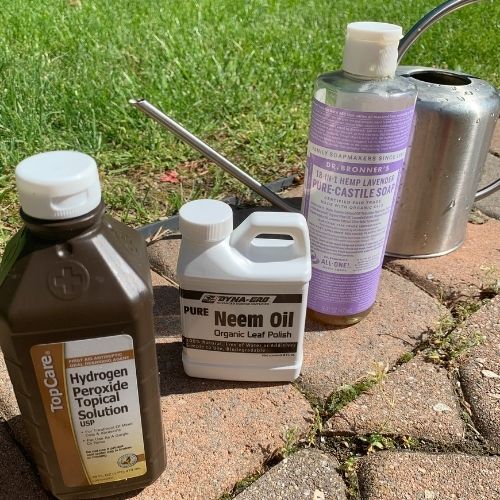
- Hydrogen peroxide: Kills larvae that may be hiding in the soil. I would recommend stocking up on a few bottles. I went through one bottle VERY quickly when watering my plants with this.
- Mix one part 3% hydrogen peroxide with four parts water and water your plant’s soil with this. Repeat this as needed, paying attention to your plant’s condition. I did this a couple of times total, once a week or so.
- Neem oil: Kills bugs that are hanging around on the plant’s leaves (also, does NOT smell great).
- Castile soap: Also helps to kill bugs hanging around on the plant’s leaves.
- Add 2 tsp of neem oil with 1 tsp of castile soap to about a 24-oz spray bottle. Fill the rest with water and shake it up. Be sure to test this on each of your plants first on a small portion of a leaf. If all seems OK, spray all over the leaf surfaces, undersides, and stems too. Be sure to get any little crevices. Repeat this every couple of days until it looks like the problem is resolved.
Note: BE CAREFUL when you’re treating your plants. Don’t go overboard and be gentle. I eyeballed some of the measurements for my first application and went a little heavy with the spray. I could tell some of my plants were not happy with me and I actually did kill an orchid, but it looked like it was on its way out anyway so I like to think I just accelerated the process…
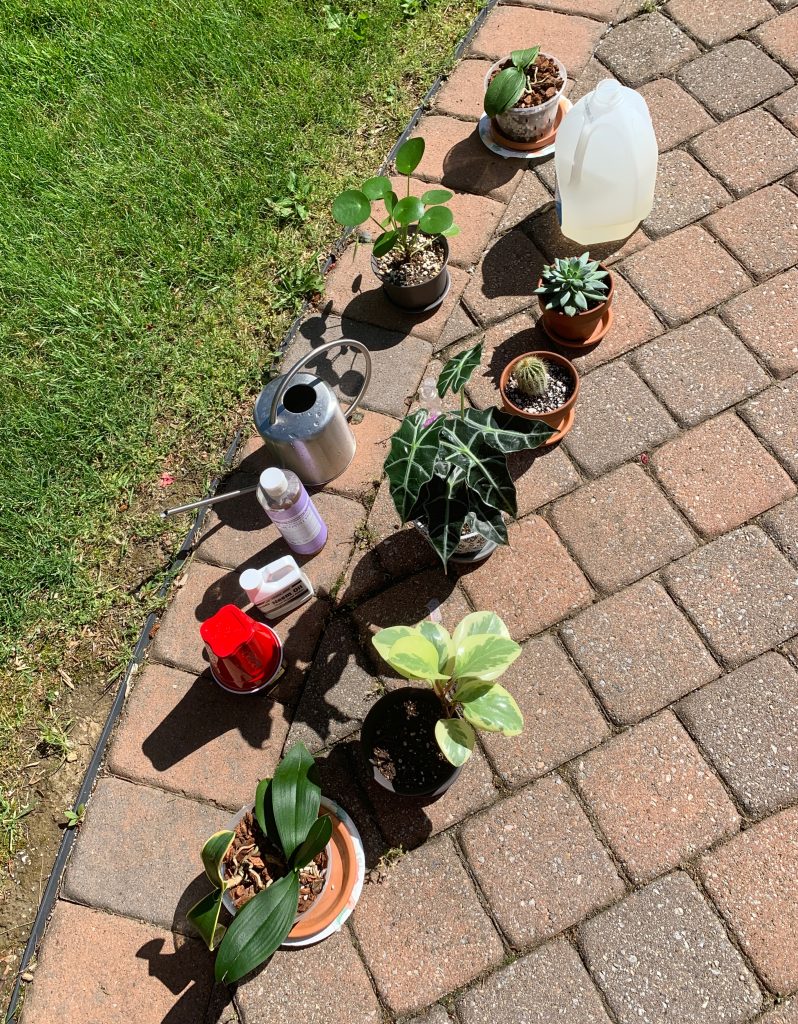
After I had given my plants a couple of treatments, it seemed like the problem was resolved. I still did notice a few little gnats here and there, but it was not enough to cause another infestation and the problem eventually went away completely.
If it did look like there was anything suspicious going on with one of my plants, I just separated that plant from the others until it seemed OK. But I’m happy to report that I didn’t have much of an issue after a few treatment sessions!
How Can I Recognize Fungus Gnats?
Fungus gnats have long legs and look almost like little mosquitoes. If you notice small flies that look like they’re hanging around your plants, landing on the soil and flying around them (unlike fruit flies which primarily stick to your kitchen to hang out around produce) there’s a good chance it’s a fungus gnat situation.

This was around the time that I had moved, and during the moving process, many of my plants were all in a box together for over a day—plenty of time for little critters to mingle among my plants! It can be hard to tell which ones are infected if you have many plants grouped together.
I saw the bugs directly on the soil of a couple of plants and I could also see little gnats flying around the plants. After careful inspection, I decided to treat all of the plants that had been grouped together just to be safe.
How Can I Prevent Fungus Gnats?
The first line of defense against pests should be preventing them in the first place. Here are a few ways you can prevent fungus gnats and other pests:
- Have good plant hygiene. Properly caring for your plants will keep them healthy and strong. A weak plant is more susceptible to pests. In fact, pests can actually sense weak and dying plants.
- Buy your plants from reliable sources that you have purchased from before or that have excellent reviews. However, recognize that things happen and there is always a risk when bringing new plants into your home.
- Don’t use any soil from outdoors or other contaminated soil for indoor plants.
- Closely inspect any new plants you bring home.
- Quarantine your plants when you bring them home.
- Clean pots between reusing them for different plants.
Fungus Gnat Treatment Supplies List


No fungus gnats, but struggling with mealybugs? Check out my post on getting rid of mealybugs here.
Amy Johnson says
When diluting hydrogen peroxide to be applied to the soil of your plants to eradicate fungus gnat larvae, be sure to put your hydrogen peroxide mix into a dark bottle such as a dark brown (like the hydrogen peroxide generally comes in), black, dark blue — something that will block light. Hydrogen peroxide breaks down into water in the presence of light, so leaving (storing) your mixture in clear or translucent bottles will guarantee that you will be applying only water when you next want to be treat your plants. Better yet, mix only enough for one use and mix another batch each time you want to apply another treatment. Toss leftovers. Hydrogen peroxide is cheap enough.