
This post contains affiliate links. I will earn a small commission, at no extra cost to you, if you make a purchase through these links.
When I first became somewhat interested in houseplants, all I understood about what to pot my plants in was “soil.” Only when my hobby started growing did I learn that sometimes soil isn’t even included in a plant’s potting medium, and that there are many different amendments you can make to your potting medium to cater to your plants’ specific needs.
First, let’s discuss soil. The number-one thing you should never do is take soil from outdoors and use it for your plants. Outdoor soil has bugs, weeds, diseases, and other not-great things for houseplants in it.
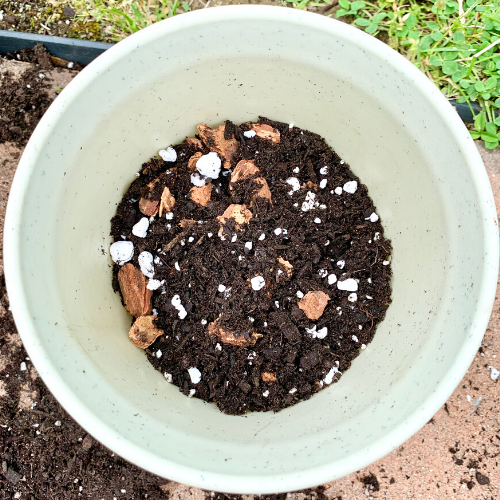
A potting medium is what your plant lives in. Potting soil is a type of medium but is not necessarily suited for houseplants. Potting mix, on the other hand, is a soil-less potting medium usually made up of peat moss, pine bark, perlite, and organic materials. It is formulated specifically to help your houseplants grow.
We often refer to potting mix as potting soil because they’re both “the brown stuff that you pot your plants in.” However, if you look at the bag it comes in it probably actually says something like “indoor potting mix.”
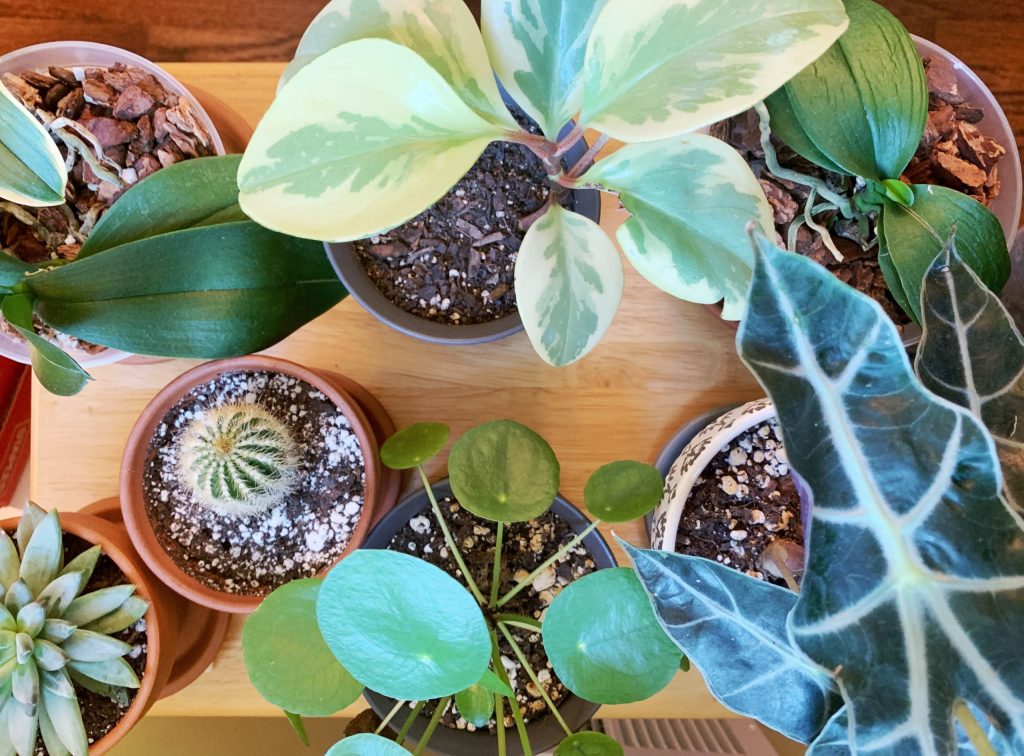
There are many different types of amendments you can make to your potting medium to help your plants with their specific needs. Below is a guide to some common potting medium ingredients, but this is by no means an exhaustive list.
- Bark – Bark is good for epiphytic orchids, bromeliads, and ferns. These plants technically can be grown in soil, but they don’t need to be so compact because they are actually found growing on trees in their natural habitat. The bark typically is sold in packs that look like wood chips.
- Charcoal – Activated charcoal helps with overall cleanliness as well as absorbing excess moisture if you are a chronic over-waterer. It can also help boost the efficiency of your fertilizer. I personally have not used activated charcoal as part of my regular potting medium yet, only in my closed terrarium. Activated charcoal is an essential ingredient for closed terrariums because it helps keep the closed ecosystem clean since it lacks airflow.
- Clay pebbles – These help to absorb moisture that you add to your medium. They also help with drainage and air circulation. A common use for clay pebbles in houseplants is in an orchid medium, although many people prefer to just use the orchid bark.
- Coco coir – Helps to hold water and retain nutrients, and also helps with aeration. It is sometimes used to replace peat moss and can hold more water than peat moss. Some people like to plant directly into the coir with nothing else, or simply add some into their medium.
- Peat moss – Peat moss and sphagnum moss (we’ll discuss the latter a little further down), actually come from the same plant. Peat moss is the decayed matter from sphagnum moss that has settled at the bottom of a bog (confusing, I know. Why don’t they just called it “decayed sphagnum moss”?). It’s great for retaining moisture. It’s also acidic and therefore good for acid-loving plants.
- Pebbles – Pebbles can be used to create drainage. If you reeeeally want to use a pot that doesn’t have any drainage holes, you can put a layer of pebbles in the bottom before planting your plant. This will raise the plant so that the roots are not sitting in water at the bottom of the pot. If you have one of those decorative ceramic pots that has one teeny hole on the side, it’s a good idea to throw some pebbles in there, too. I would always recommend having some pebbles on hand, extra drainage is usually never a bad thing.
- Perlite – Sometimes referred to as volcanic popcorn (because it’s actually puffed volcanic rock), it’s used to add more drainage to your medium and help with aeration. I’d recommend having this on hand too, as a little bit of perlite is used in many common potting mixes. Actually, my go-to potting mix is just a regular indoor plant potting mix with a handful or two of perlite.
- Pumice – Pumice is pretty similar to perlite and often the two can be interchanged. Neither of the two retains much water and both help provide excellent drainage and aeration. Pumice is heavier than perlite so you may want to use it if you have a plant that needs a more stable base.
- Sand – Coarse sand helps to add more drainage to your potting medium. The most common use for sand is for succulent and cacti soil. If I don’t have any succulent soil, I’ll use three parts potting soil, two parts coarse sand, and one part perlite to create my own mix. If you’re a succulent lover, consider keeping all three of those on hand!
- Sphagnum moss – Going back to the earlier peat moss description, peat moss is decayed sphagnum moss harvested from the bottom of a bog, while sphagnum moss is harvested alive while growing on the surface of a bog. Sphagnum moss holds moisture as well, but it’s not acidic like peat moss. It also makes for good insulation and is commonly used to line hanging baskets.
- Vermiculite – Vermiculite can be used to improve aeration while also improving water and nutrient retention because of its sponge-like qualities. It might look somewhat similar to perlite, but don’t confuse the two!
If all of this seems like a lot, well…it kind of is! But don’t worry, there is absolutely no shame in purchasing a pre-made mix. Heck, I do it all the time! However, having some of these amendments on hand can definitely be cost effective for you in the long run.
I recommend taking a look at the requirements of all of the houseplants you own and seeing what they have in common, then, deciding if it would be wise for you to add any of these to your arsenal.

Leave a Reply